

## Learning Cincinnati, One Neighborhood at a Time
Next fall, Neighborhood Economics comes to Cincinnati. Before we show up with a conference agenda, we want to actually know the place — not the skyline version, the neighborhood version.
So I’ve joined Common Good Journal a new effort convened by my friend and mentor Peter Block and a small crew of journalists, connectors, and storytellers, including Rijon Erickson, investigative journalist Lorie Baker, who writes on this substack filmmaker Jim Prues, and educators Dan Joyner and Gayle Hilleke. The idea is simple and unfashionable: local news has collapsed, national narratives have swallowed local ones, and the people doing the actual work of repair in their own neighborhoods rarely get to tell their own story.
They have started in two Cincinnati neighborhoods — Westwood and North College Hill — where the group already has trust and relationships. Over six weeks, residents in each place will work through a set of questions designed to surface both the story and a measure of social capital in that neighborhood — building on the “social capital cuts the cost of financial capital” work I’ve seen firsthand, from DeAmon Harges’s Indianapolis experiments to the community-embedded insurance pools I learned about after Helene. As Peter said “The purpose of measuring social capital is to produce concrete outcomes that expand access and lower the cost of capital, and increase health, the local economy, and well being.” And we will be looking for organizations who will pay for that measured social capital; perhaps in lower fees, mortgage loan origination costs or something else we find.
The call is to explore this in partnership with Canadian economist Mark Anielski who has years of experience in measuring social capital. He is known for expanding how we measure wealth beyond gdp to include wellbeing, trust, relationships, and community strength. His work treats social capital as a real economic asset that can be mapped and measured alongside financial and physical capital.
For me, this is fieldwork. It’s the same instinct that sent me digging into the Cincinnati Children’s Hospital anchor investment in Avondale — $11 million in housing, an 18% drop in inpatient days for kids with chronic conditions, a hospital that makes more money when its neighborhood is healthy. I want more stories like that before the conference, not summarized in a briefing document, but heard from the people living them.
Children’s is playing the role of a “Community Quarterback” for the Cincinnati pilot in the NY Federal Reserves groundbreaking initiative of Making Missing Markets The community quarterback is the local backbone leader that convenes stakeholders, aligns capital and institutions, and keeps a neighborhood or regional economic strategy moving from vision to execution. In the New York Fed framing, the quarterback helps coordinate actors who would not naturally act together and reduces the friction that keeps community investment from happening. Making missing markets is the idea that some valuable community outcomes do not happen because the relationships, institutions, data, or financial structures needed for investment are absent or weak. The work is to intentionally build those conditions so capital can flow to places and projects that conventional markets overlook.
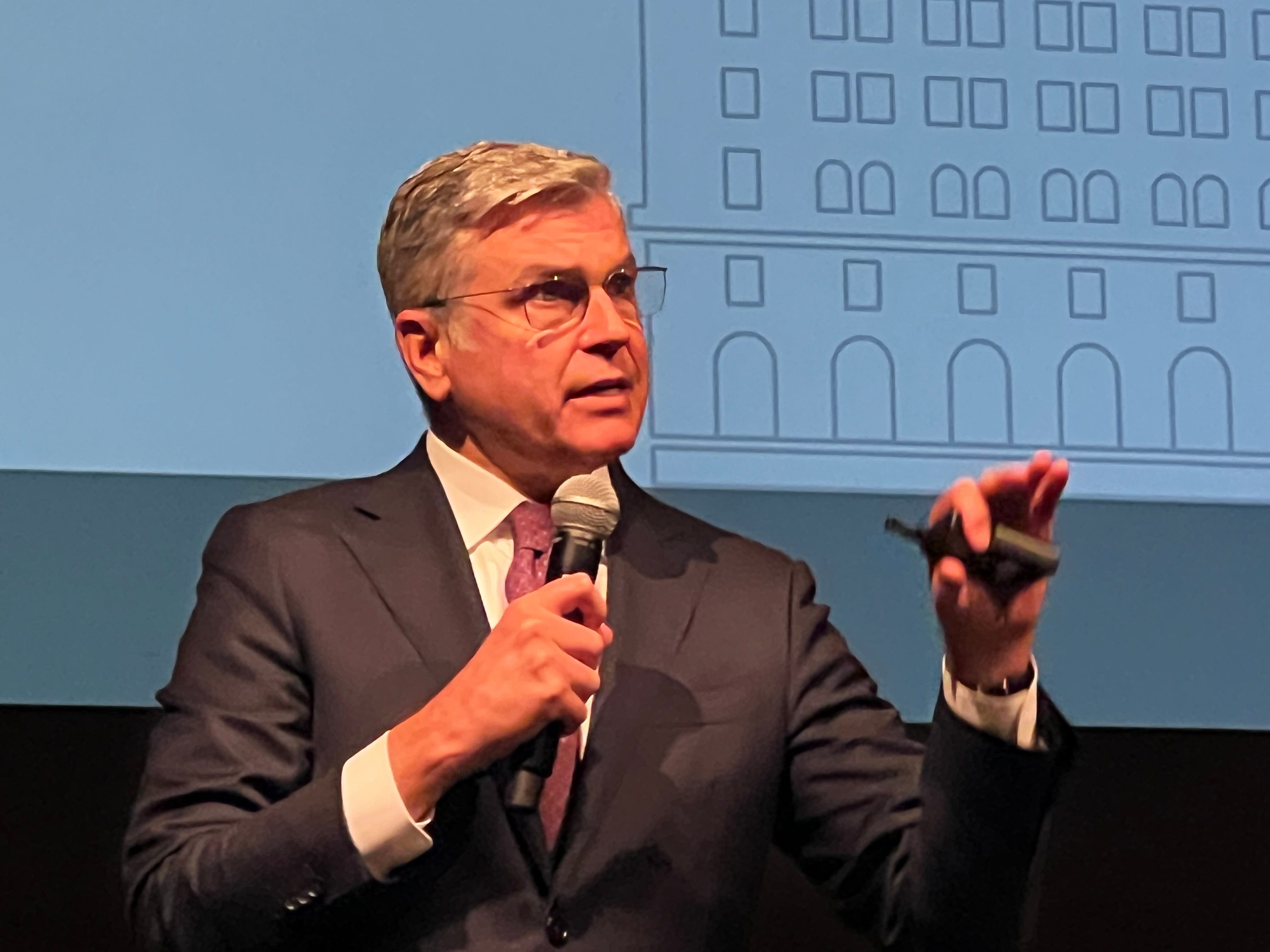
MMM is the brainchild of long time Neighborhood Economics ally and personal friend David Erickson
.
Through his work connected to the Federal Reserve and community finance, he has helped shape practical strategies for aligning local leadership, capital, and market infrastructure to unlock inclusive economic growth.
We will also be looking at the ownership economy work of Coop Cincy and its dynamic leader, Kristen Barker. Co-op Cincy builds and supports worker-owned businesses to create family-sustaining jobs, shared ownership, and a more inclusive local economy. It has been active since 2011 and focuses on growing an interconnected network of co-ops in Greater Cincinnati. (coopcincy.org)
Barker is Co-op Cincy’s co-founder and president, and she is a leader in adapting the Mondragon-inspired union co-op model in the U.S and also helping to fund the initiatives.
-